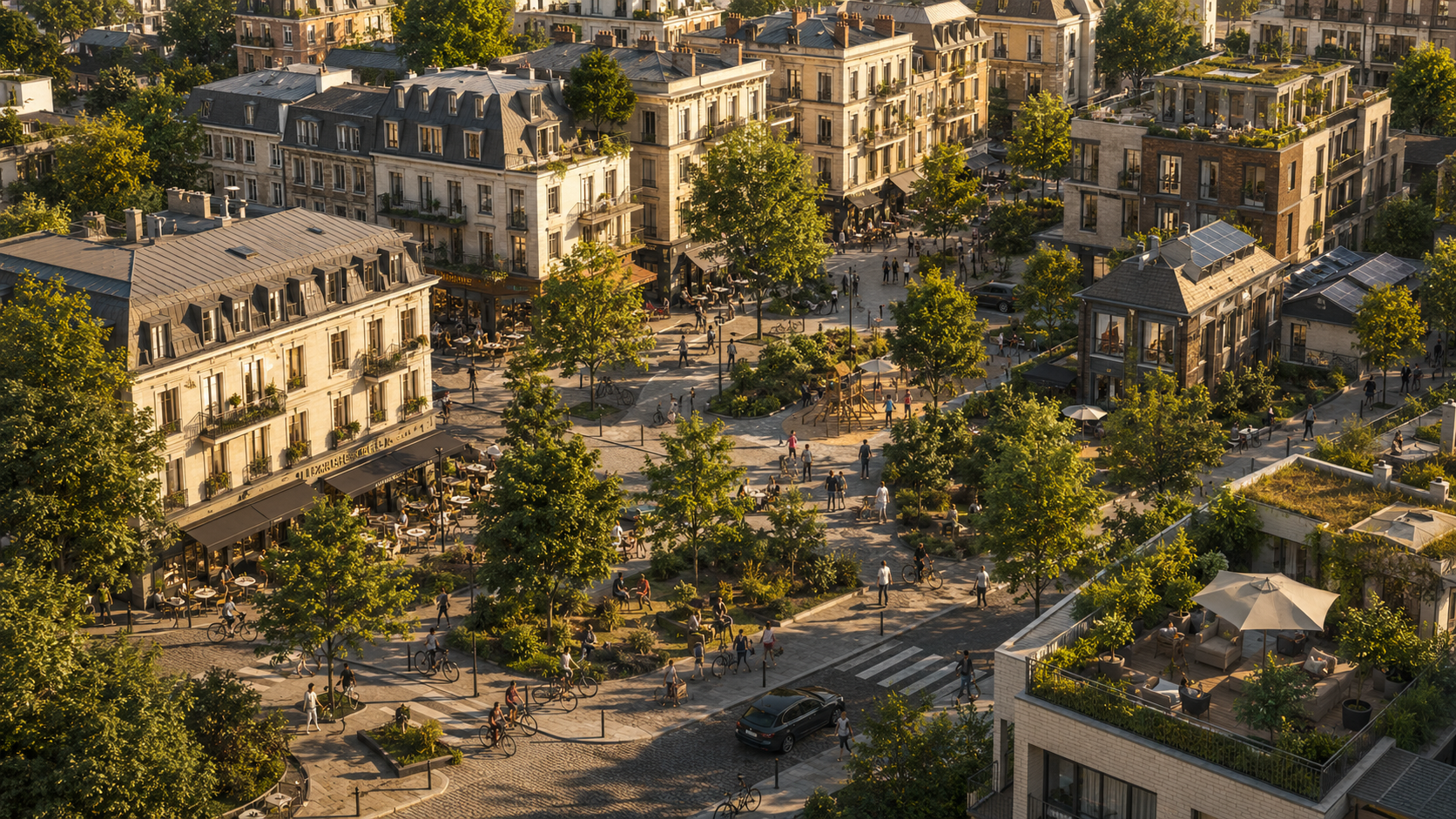
Social isolation is rising
Loneliness is one of the greatest public-health challenges in municipal social planning. Digital infrastructure that fosters real encounters is no longer optional, it is a core responsibility.
Close connects citizens with local initiatives, meeting places and activities in their neighbourhood, and makes visible where social participation grows.
Sozial-Index
6.9/10
+0.4 ggü. VJ
Aktive Initiativen
74
+12 / Mo
Events / Woche
18
+6 ggü. VJ
Partizip.-Score
A-
↑ von B
Stadtteile · Aktivierung
Tagesrhythmus · Aktivierung
↑ +22% VorperiodePartizipationsscore
Soziale Infrastruktur · Bestand
18
Events / Wo
82%
Raumauslast.
37
Initiativen
Q3 ✓
Bericht
Loneliness is one of the greatest public-health challenges in municipal social planning. Digital infrastructure that fosters real encounters is no longer optional, it is a core responsibility.
Structures for civic engagement are weakening. Municipalities need tools that strengthen existing initiatives and make new ones visible.
Neighbourhood development often relies on incomplete information. Where encounters happen is barely measurable, Close provides aggregated signals without individual tracking.
Social infrastructure is financed project by project. Municipalities that can demonstrate impact secure funding and build stronger arguments.
Close creates access to neighbourhood life for people without smartphones, via web, without any app requirement.

„Soziale Teilhabe entsteht nicht von selbst, aber sie lässt sich ermöglichen.“
Digitale Infrastruktur für kommunale Sozialräume
Close connects neighbourhood actors, meeting places and local initiatives on a shared platform. Citizens discover activities, spaces become visible and bookable, and the administration receives measurable signals about social activity in the social district.
Residents discover initiatives, meeting places and events directly in their neighbourhood, low threshold and without any app requirement.
Public and semi-public spaces, gathering points and community venues receive digital profiles, findable, bookable, connected.
Local associations, groups and volunteer initiatives become visible and can be targeted for support and networking.
Social district coordinators see activity, spaces and initiatives at neighbourhood level at a glance, and can intervene selectively.
Aggregated signals on social activity at neighbourhood level, GDPR-compliant and usable for social planning.
Periodic reports for social district funding, grant applications and political reporting, exportable.
Close provides aggregated data on activity, initiatives and space usage at neighbourhood level, a basis for social planning and funding decisions.
Volunteer structures become accessible to more people through Close, without any extra effort from the initiatives themselves.
Municipalities that can prove impact secure funding and build stronger arguments with grant-making bodies.
Coordinators reach more citizens with less effort. Close multiplies their reach without increasing their working hours.
For older citizens, Close offers low-threshold access to neighbourhood life, without app download, without mandatory registration.
Municipalities use Close to understand activity in defined social districts and strengthen them selectively.
New districts can be equipped with social infrastructure from the start, community first as a planning principle.
Engagement structures become visible and reachable, for people who want to get involved and for coordinators.
Close provides data as a foundation for social district funding and grant applications.
Caritas, AWO, Diakonie and other providers can contribute activities through the same platform.
Accessible access to neighbourhood life for older citizens.
Activities for people with a migration background become visible as part of inclusive social infrastructure.
Social activity becomes measurable as a contribution to SDG reporting.
Close reflects the structure of municipal social districts: the administration or a lead organisation as the overarching unit, neighbourhoods as the operational level, initiatives and citizens as the content layer.
Layer 1
The administration manages the full platform, controls access permissions and receives reporting at neighbourhood level.
Layer 2
Individual neighbourhoods or action areas receive their own visibility zones with local activities and meeting places.
Layer 3
Local associations, coordinators and citizen groups maintain content and activate community in their area.
Close does not collect personal behavioural data. All signals are aggregated, anonymised and evaluated at neighbourhood level, a privacy-compliant tool for municipal social planning.
Social index
6.9
Activity and connection signal per neighbourhood
Active initiatives
74
Associations, groups and volunteer initiatives
Participation rate
38%
Citizens with regular participation
Participation score
A-
Validated input for grant applications and reporting
A Close pilot begins in a clearly defined social district. The goal is to make existing initiatives and meeting places visible and gather measurable signals on social participation. Close pilots are typically funded through municipal budgets, grant programmes or provider funding we clarify in a first conversation which model fits your situation.
Enquire about a pilotNeighbourhood, target groups, meeting places and local actors are determined together.
Places, initiatives and coordinator access are configured, within days.
First activities become visible and are communicated by coordinators.
Monthly reports show activity and social inclusion in the social district.
After the pilot: a clear picture of impact, effort and potential.
Close does not collect individual behavioural data. Citizens decide for themselves whether and how they use the platform. Municipalities receive aggregated signals, no tracking of individuals, no behavioural profiles.
Cities and municipalities of any size that invest in social district work. A particularly good fit are municipalities with existing neighbourhood management or social district coordination.
Yes. Close is designed as digital infrastructure for social district development and can be embedded in existing funding programmes.
Close does not collect personal behavioural data. All signals are aggregated. Citizens can use the platform without registration.
A defined social district, a contact person and existing local actors. We support the setup process.
Yes. Close is designed as a complement to existing structures, not a replacement.
Typically three months of active operation, with setup and onboarding in one to two weeks.
Close works entirely via browser, no app download required. Coordinators can also maintain activities for people without digital devices.
In a first conversation we clarify social district structure, existing actors, funding context and a realistic pilot scope.
Enquire about a pilot